
How Amazon prep centres streamline FBA for UK sellers
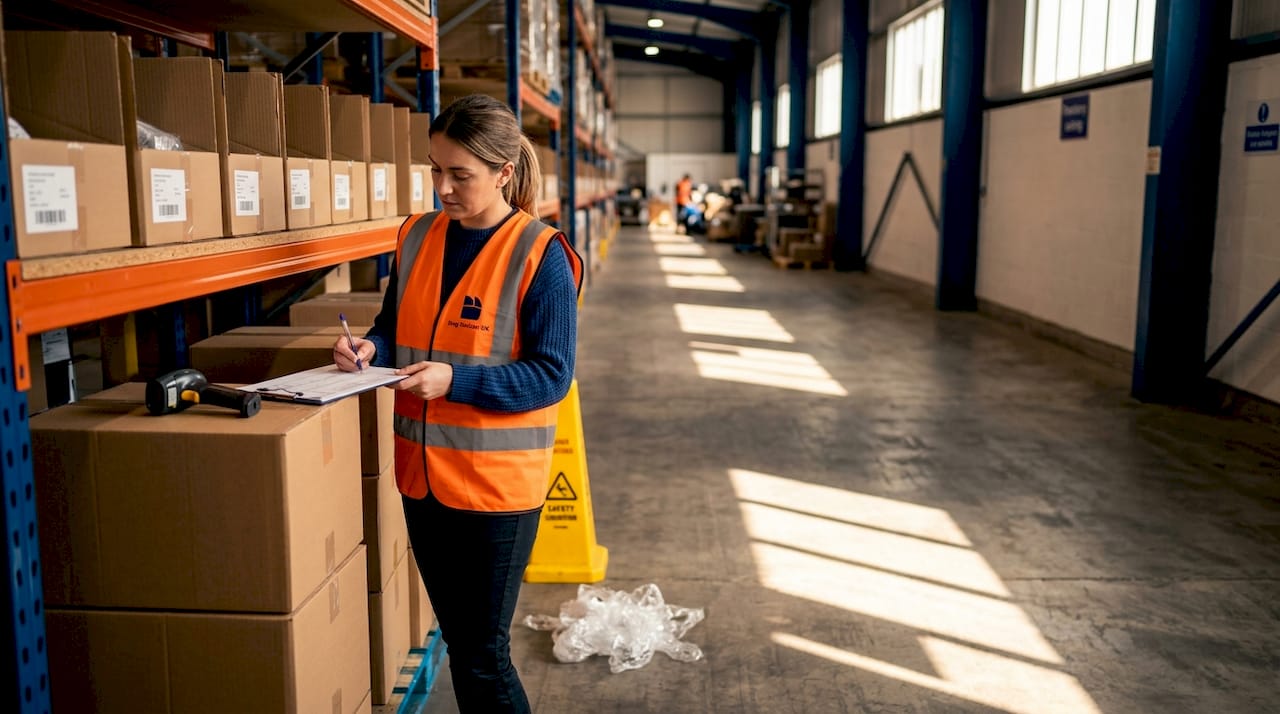
Most UK Amazon sellers assume that sending inventory to a fulfilment centre is a relatively simple task. Box it up, slap on a label, ship it off. The reality is quite different. Amazon’s FBA requirements cover everything from specific barcode placement and polybag thickness to carton weight limits and shipment documentation, and a single misstep can result in rejected inventory, financial penalties, or a suspended account. Prep centres are third-party services that handle all of this on your behalf, receiving your stock, inspecting it, labelling it correctly, packaging it to specification, and shipping it directly to Amazon’s fulfilment centres so you never have to worry about getting it wrong.
Table of Contents
Key Takeaways
Point | Details |
FBA compliance simplified | Prep centres ensure your inventory meets every packaging and labelling requirement for Amazon FBA. |
Rapid turnaround | Most UK prep centres process and ship inventory within 24-48 hours, speeding up your sales pipeline. |
Focus on growth | Outsourcing prep lets sellers spend more time sourcing products and optimising listings. |
Reduced error risk | Professional prepping minimises costly mistakes and rejected shipments that hit your profit margins. |
What is an Amazon prep centre?
A prep centre is a specialist warehouse that acts as the bridge between your suppliers and Amazon’s fulfilment network. Rather than handling stock at home or in your own storage space, you send your inventory directly to the prep centre, and their team takes over every step of the process from that point forward.
The workflow follows a consistent pattern across most professional prep services. First, your goods arrive at the facility and are received into the system, with quantities checked and logged. Next comes inspection, where items are examined for damage, incorrect stock, or anything that would fail Amazon’s standards. After that, the team applies FNSKU labels (Fulfilment Network Stock Keeping Unit labels, which uniquely identify your products within Amazon’s system) to every unit. Items then go through the appropriate packaging process, which might include polybagging fragile or soft goods, bubble wrapping breakables, or building bundles where multiple items are sold as a single unit. Finally, the prep centre creates the shipment in Seller Central and sends the cartons directly to Amazon’s designated fulfilment centre.
Here is a quick overview of the key prep tasks most centres offer:
Task | Purpose | Amazon requirement |
FNSKU labelling | Identifies your units in Amazon’s system | Mandatory for all FBA items |
Polybagging | Protects soft goods, prevents contamination | Required for clothing, plush, food |
Bubble wrapping | Protects fragile items | Required for glass, ceramics |
Bundling | Groups items into a single sellable unit | Must meet set guidelines |
Carton labelling | Directs boxes to the correct fulfilment centre | Mandatory for all shipments |
Shipment creation | Generates SPD or LTL plans in Seller Central | Mandatory before despatch |
Good prepping Amazon FBA inventory is not just about following a checklist. It requires familiarity with Amazon’s frequently updated requirements, the right materials, and efficient processes to keep turnaround times fast. Following ecommerce packaging best practices is equally important to protect goods throughout their journey.
“Prep centres receive Amazon sellers’ inventory, inspect it, apply FNSKU labels, package according to Amazon’s strict FBA requirements, create shipments in Seller Central, and ship directly to Amazon fulfilment centres.”
The key benefit is professional compliance delivered at speed. A good prep centre does not just get the job done; it gets it done correctly, every time.
Why UK Amazon sellers use prep centres
With the workflow clear, let’s explore why so many UK Amazon sellers choose prep centres over home or warehouse-based prepping. The answer comes down to three things: time, compliance, and scale.
When you are handling prep yourself, every hour spent labelling and packaging is an hour not spent sourcing new products, optimising listings, or researching profitable niches. For sellers running retail arbitrage or online arbitrage models, this trade-off becomes painful quickly. For wholesale and private label sellers dealing in larger volumes, it becomes completely unsustainable. Prep centres streamline FBA by outsourcing these compliance-heavy tasks, freeing you to concentrate on the activities that actually grow your revenue.

Consider the practical difference between DIY prep and professional prep:
Factor | DIY prep | Professional prep centre |
Compliance knowledge | Self-taught, easy to miss updates | Expert, continuously updated |
Speed | Limited by your own capacity | Fast, scalable to volume |
Storage space | Limited to your home or rented unit | Full warehouse facilities |
Error rate | Higher, especially under volume pressure | Low, with trained staff and QC checks |
Cost | Low upfront, high in hidden costs | Transparent per-unit pricing |
Scalability | Difficult beyond a certain point | Scales easily with your growth |
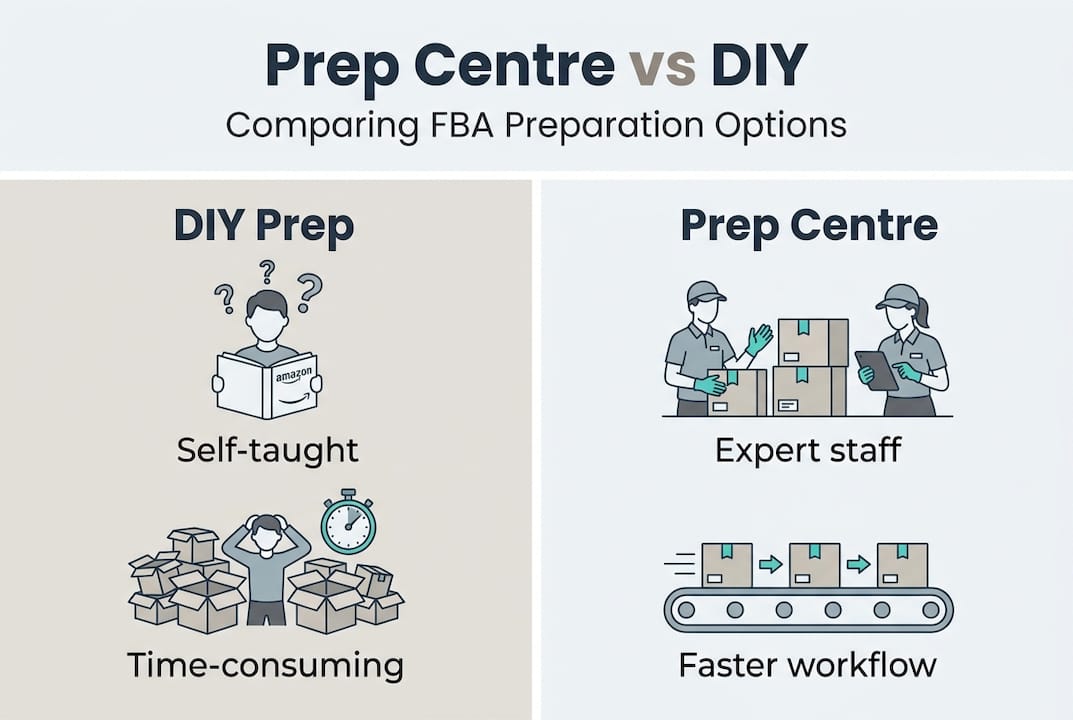
Exploring the prep centre vs in-house warehousing comparison is worthwhile before making any long-term decision about your operations. The hidden costs of DIY prep, including materials, your own time, storage overheads, and the expense of FBA rejections, often exceed what a professional service charges per unit.
Sellers using optimised logistics solutions consistently report faster stock velocity and fewer fulfilment issues when they hand over prep responsibilities.
Key reasons UK sellers switch to prep centres:
Scaling arbitrage and wholesale operations without hitting a physical ceiling
Reducing costly FBA errors such as missing labels or incorrect packaging
Freeing up sourcing time to find more profitable products
Accessing professional-grade materials like compliant polybags and shrink wrap
Eliminating the need for your own storage and packing equipment
Pro Tip: If you are spending more than 10 hours per week on prep tasks, the maths almost certainly favour a prep centre. Calculate your hourly rate and compare it to the per-unit cost of outsourcing before assuming DIY is the cheaper option.
How prep centres navigate Amazon FBA compliance
Understanding the strategic benefits, let’s get specific about how prep centres tackle compliance and what this means for your shipments. Amazon’s requirements are detailed, category-specific, and updated regularly. Missing one requirement does not just delay your shipment; it can result in disposal fees, return costs, or in serious cases, account suspension.
Here is how a professional prep centre works through the compliance process for each shipment:
Receipt and unit count verification to confirm the correct quantity arrived from your supplier, identifying discrepancies before they become your problem with Amazon.
Product-level inspection checking for damage, expired dates on consumables, incorrect sizing or colour variants, and any cosmetic defects that would fail Amazon’s received condition standards.
FNSKU label printing and application using the exact label dimensions, placement, and coverage rules that Amazon specifies. Labels must cover any existing manufacturer barcodes on the unit.
Category-specific packaging applying polybagging where required (for example, products containing multiple components, clothing, bedding, and items over a certain weight threshold), bubble wrapping breakables, and adding suffocation warning labels to polybags larger than five inches on any side.
Bundle assembly where applicable, building multi-item bundles with a single FNSKU and a “sold as set” sticker to prevent Amazon from separating the units.
Carton building to meet Amazon’s maximum carton weight of 23kg for standard shipments (50lbs), with cartons labelled correctly for the designated fulfilment centre.
Shipment creation in Seller Central, generating the correct Small Parcel Delivery or Less Than Truckload plan, assigning items to their correct shipment, and printing Amazon’s box-level content labels.
Understanding FBA prep requirements in full is essential background knowledge even if you outsource the work entirely. Similarly, barcode labelling rules are nuanced enough to deserve dedicated study.
“The most common reasons Amazon rejects FBA shipments are incorrect or missing FNSKU labels, non-compliant packaging for the product category, and cartons exceeding weight or dimension limits.”
A prep centre removes all three of these risks simultaneously. Their teams are trained to know which categories require which prep types, and they stay current with Amazon’s policy updates so you do not have to.
Pro Tip: Always confirm that your prep centre understands your specific product categories before signing up. A centre experienced with general merchandise may not be across the requirements for supplements, electronics, or hazmat items, which have their own distinct FBA shipping compliance considerations.
Good ecommerce inventory management at the prep stage prevents downstream issues that are far more expensive to fix once stock is already inside Amazon’s network.
Choosing the right prep centre for your Amazon business
You have seen what prep centres offer; now here is how to select the right partner to suit your business goals and FBA requirements. Not all prep centres are equal, and choosing the wrong one can create just as many headaches as prepping yourself.
Turnaround time is one of the first things to check. Most reliable UK prep centres process shipments within 24 to 48 hours of receiving your inventory. This speed matters enormously if you are running time-sensitive arbitrage deals or need to restock fast-moving products before they go out of stock.
Service range should align with your product categories. A strong prep centre will handle:
FNSKU and manufacturer barcode labelling
Polybagging and shrink wrapping to Amazon’s specifications
Bubble wrapping and box-in-box packaging for fragile goods
Multi-item bundle creation with correct stickering
Kitting and repackaging where products arrive incorrectly packaged
Shipment plan creation within Seller Central
Oversize and heavy item handling
Pricing transparency is non-negotiable. Look for a centre that publishes clear per-unit rates for standard prep tasks and additional rates for more complex services. Avoid any provider with vague “custom quotes only” pricing structures that make it impossible to calculate your costs accurately in advance.
Communication and support matter more than most sellers realise until something goes wrong. A prep centre that responds quickly, provides clear updates on your shipments, and flags issues proactively is worth far more than one that is slightly cheaper but leaves you in the dark.
Understanding how to label Amazon FBA products correctly yourself gives you the knowledge to verify that your prep centre is doing the job right and ask the right questions during your evaluation.
One often overlooked factor is location. A UK-based prep centre reduces delivery times significantly compared to routing stock through a European facility, and it avoids the customs complications that cross-border prep arrangements can introduce.
Pro Tip: Request a test shipment before committing to any prep centre at scale. Send a small batch of 20 to 50 units and evaluate the accuracy of the labelling, the quality of the packaging, the speed of turnaround, and the clarity of communication before trusting them with your full volume.
The reality of prep centres for scaling Amazon FBA in the UK
Before wrapping up, let’s address some hard-won lessons and myths that most UK FBA sellers miss when thinking about prep centres.
The most persistent myth is that prep centres are only for large, established brands shifting hundreds of units per week. This is simply not true, but the nuance matters. If you are testing Amazon with a handful of products and sending in 20 units a month, doing your own prep is entirely reasonable. The real shift happens when prep starts consuming meaningful chunks of your time or when the complexity of your product mix grows beyond what one person can reliably manage.
The second myth is that using a prep centre means giving up control over your inventory. In practice, reputable prep centres provide more visibility into your stock condition than most home setups do. You receive incoming unit counts, condition reports, and clear communication about any discrepancies or prep decisions. That is better information than most sellers have when prepping alone in their spare bedroom.
What truly concerns us, based on the sellers we work with, is the cost of ignoring compliance. A single FBA shipment rejected because of missing polybags or incorrect label placement can cost more in disposal fees, return shipping, and lost sales velocity than months of prep centre fees. Sellers who treat compliance as optional are effectively gambling with their accounts. The prep centre vs warehousing comparison almost always underestimates this risk when looking only at direct costs.
The honest truth is that prep centres are not a magic solution. They work best when you have a consistent supply of inventory, clear product information, and a supplier who despatches to the prep centre reliably. If your sourcing is chaotic or your product catalogue changes constantly, even the best prep centre will struggle to maintain efficiency. The solution is not to avoid outsourcing; it is to organise your sourcing process well enough to make outsourcing work smoothly.
For sellers serious about scaling beyond the constraints of home prepping, professional prep is not an optional extra. It is a foundational part of building an FBA business that can actually grow without you becoming its single biggest bottleneck.
Streamline your FBA prep with trusted UK solutions
Running a profitable Amazon FBA business in the UK means spending your time on the work that actually drives growth, not on wrestling with polybags and reprinting labels at midnight.

At Prep Horizon UK, we handle every step of your FBA prep process, from receiving and inspecting your stock through to labelling, packaging, shipment creation, and despatch to Amazon’s fulfilment centres. Our UK-based facility offers 24 to 48 hour turnaround times, full compliance with Amazon’s current requirements, and clear communication throughout. Whether you are scaling your arbitrage operation, growing a wholesale account, or launching a private label product, we make the prep side of your business smooth and stress-free. Take a look at our affordable FBA prep pricing and see how straightforward professional prep can be.
Frequently asked questions
Do prep centres handle labelling according to Amazon FBA rules?
Yes, prep centres specialise in applying FNSKU and barcode labels exactly as required by Amazon FBA guidelines, covering correct label dimensions, placement, and coverage of any existing barcodes.
How fast do UK prep centres process and ship Amazon FBA inventory?
Most UK prep centres offer a 24 to 48 hour turnaround between receipt of your inventory and despatch to Amazon’s fulfilment centres, keeping your stock moving quickly.
Can prep centres help avoid FBA shipment rejections or penalties?
Yes, their expertise ensures inventory meets Amazon’s packaging and labelling regulations, and outsourcing compliance tasks significantly reduces the risk of costly rejections, disposal fees, or account issues.
Are prep centres suitable for small or new Amazon sellers?
Prep centres deliver the most value when you are scaling beyond home prep capacity, but even new sellers benefit from avoiding FBA compliance mistakes that could damage their accounts early on.
Recommended
Comments